The following article is from independent journalist, Patrick Adrian. Dr. Herzog and I had the honor of being volunteers for this event and it was incredibly moving. I knew it would be somber, and a chance to pay respects to family members, neighbors, and the unfathomably loss of life. The fact that these wounds still exist, 50+ years later is testament enough of the need for such a memorial.
The Wall that Heals
Patrick Adrian, Freelance Journalist
A recent project in Claremont to support suffering veterans illustrated how a community will rally behind a worthy cause, especially when it is coupled with effective organizing and leadership.
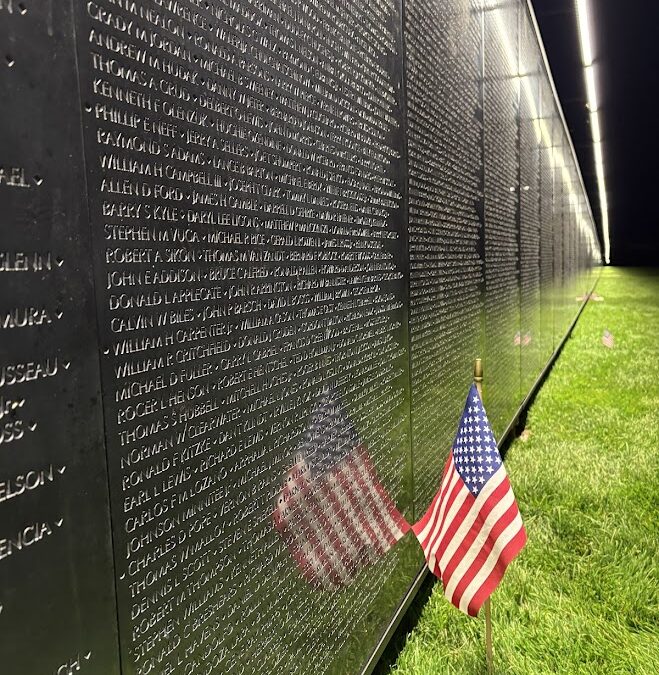
For four days in late June, Monadnock Park in Claremont hosted The Wall That Heals, a traveling three-quarter replica of the Vietnam Veterans Memorial and mobile educational center. Created in 1996 by the Vietnam Veterans Memorial Fund, the installation tours nationwide each year to help ease the suffering experienced by many veterans, as well as their families and friends.
Over 8,000 visitors came to Monadnock Park to see the installation, which displays the names of 58,318 service members who died or went missing during the Vietnam War.
City Councilor Bill Limoges, who spearheaded the initiative to host the project in Claremont, said he wanted to spread awareness and understanding about the mental health struggles that can affect veterans as a result of war.
Post Traumatic Stress Disorder, or PTSD, is a stress-related ailment resulting from traumatic experiences. The symptoms may include flashbacks or nightmares, insomnia, persistent negative feelings or mood or behavioral changes, such as depression or loss of appetite
An estimated 7% of veterans experience PTSD at some point in their life, though the rates vary by service era, according to the National Center for PTSD website. While the PTSD rate among Vietnam War veterans is 10%, the rate among Afghanistan and Iraq War veterans is 29%.
While some people learn ways to manage or overcome their suffering, others are still overwhelmed, Limoges said.
“Sometimes a person can choke that stuff down for only so long before it pops up again. You may end up losing your marriage, losing a job or losing your life.” Limoges explained. “What we are trying to do (through this project) is to teach empathy.”
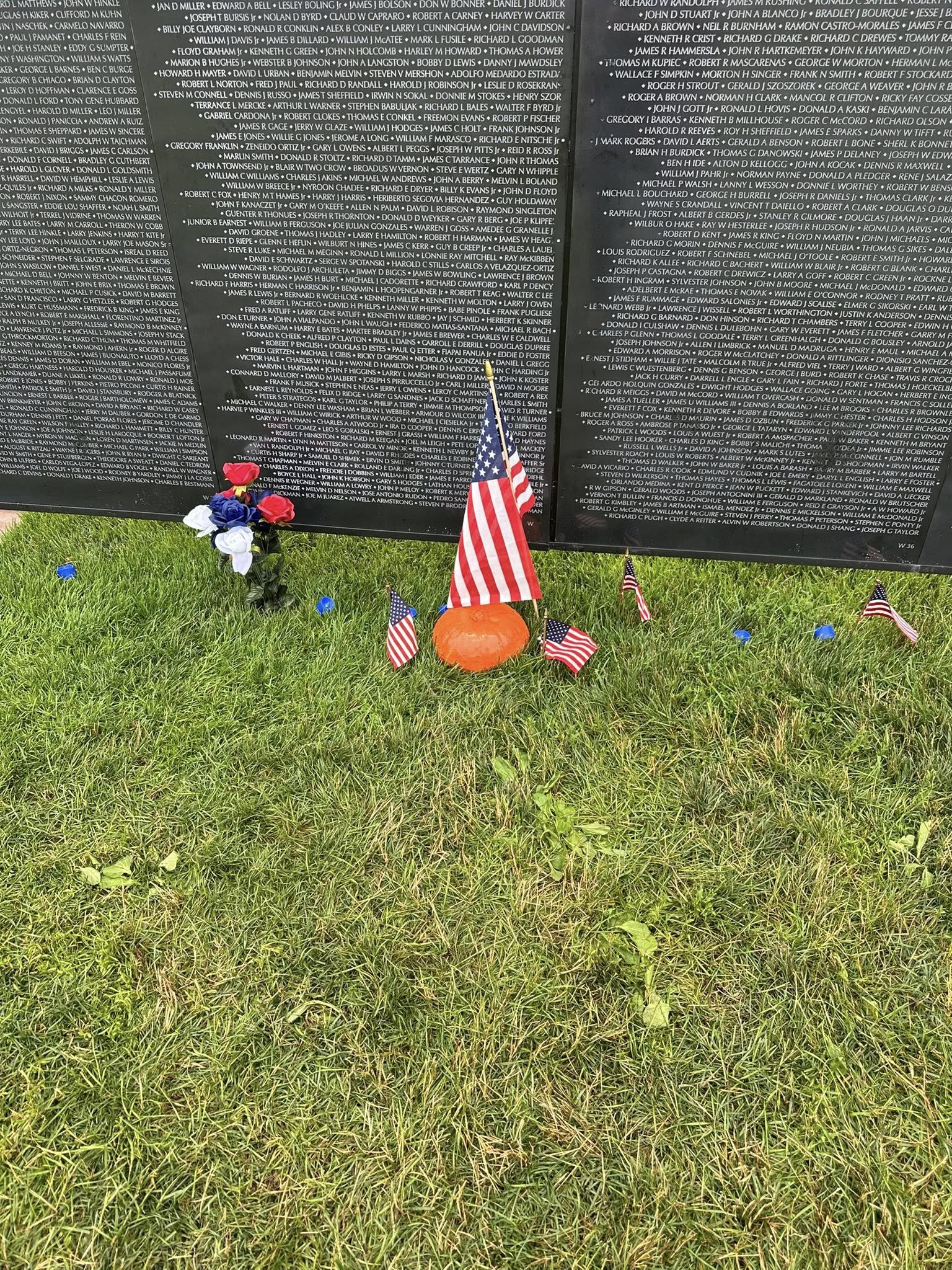
When visiting the original Vietnam Memorial in Washington, D.C., Limoges said what he found most powerful was not so much the list of names on the wall. Rather it was the tokens and messages placed by family and friends along the ground.
“The Memorial is one of the quietest and most powerful symbols on the National Mall,” he added. “There’s nothing to celebrate there, but we can give our respect to it. It’s a monument that touches our hearts.”
But bringing this project to Claremont was not easy. Over 100 applicants a year submit requests to host The Wall That Heals in their communities, according to the Vietnam Veterans Memorial Fund. Only 31 towns or cities, including Claremont, were selected for the Wall’s 2025 tour.
Applicants must begin the process over a year in advance, beginning with phone interviews to screen candidates, Limoges said. The formal application, which arrived in May 2024, sought information about the community’s organizing committee and how this group would obtain necessary resources, such as volunteers to set up and run the event.
“The VVMF wanted to make sure that we actually had the manpower to do this,” Limoges said. “And the project manager had told me that they were very impressed with our efforts to recruit volunteers – one of the best they’ve seen.”
On June 25, over 70 volunteers convened in the park to set up the installation, which included assembling a structural framework, placing 146 wall panels and setting up the floodlights for nighttime viewing.
Tim Tetz, director of outreach at Vietnam Veterans Memorial Fund, said he was impressed by the volunteer turnout.
“It’s not an easy setup,” Tetz said. “Those biggest panels are 85 pounds apiece, so having this many people means that no one had to exert themselves. Many hands come together to bring this project to a community and thousands will come and have the opportunity to experience it. And that’s the magic that happens every single week with this project.”
The volunteers varied in age and background, including high school students and Vietnam veterans. Bringing young people and veterans together provides invaluable educational opportunities,Tetz noted.
“You get a high school kid who has to do volunteer hours for his graduation, standing and carrying a panel next to a Vietnam vet. They get to hear stories and it brings about awareness about this war,” Tetz said. “So the wall begins that storytelling.”
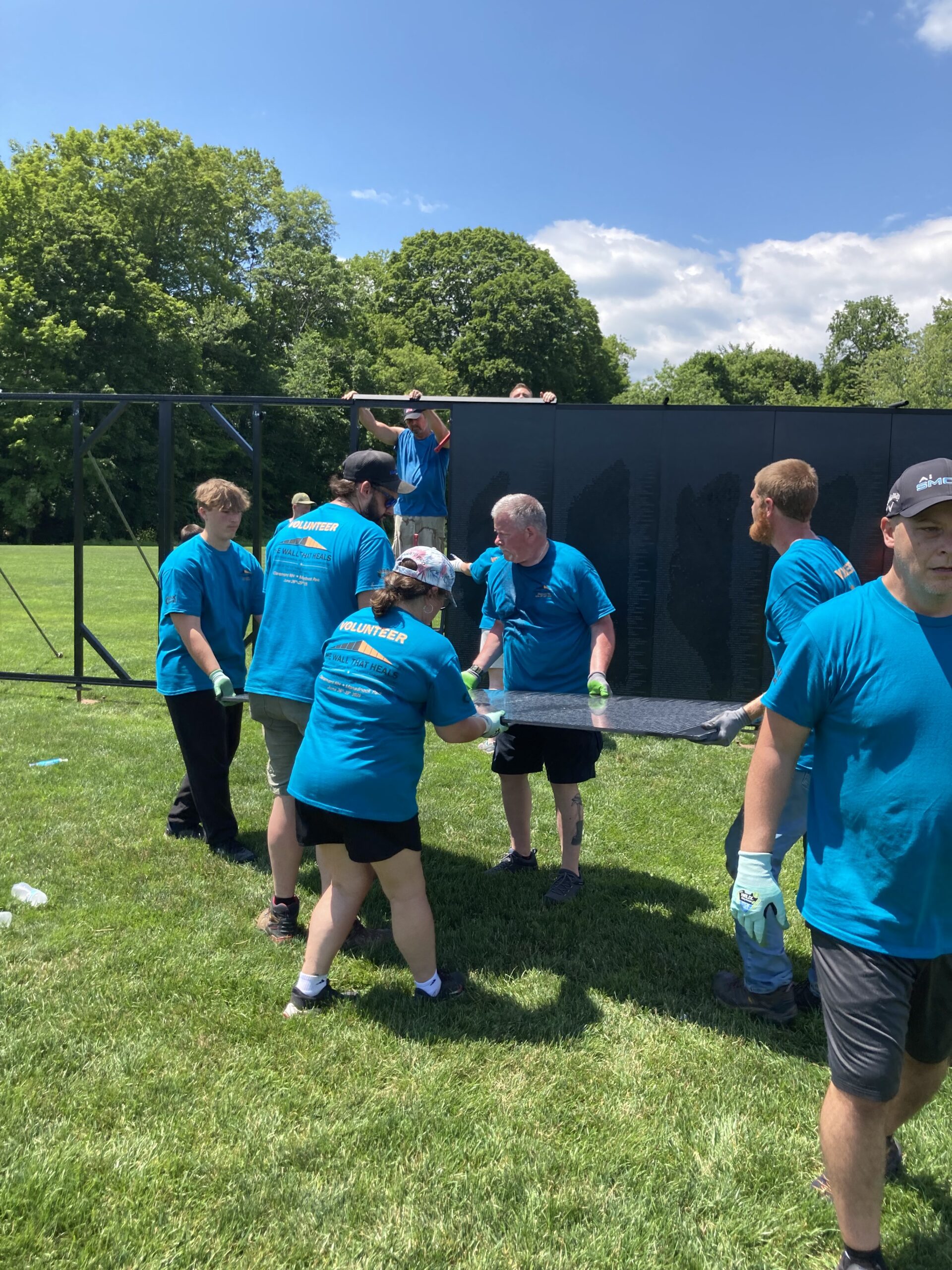
This sharing of experiences and emotional connections can motivate first-time volunteers to continue offering their time and service to future veterans initiatives, Tetz added.
Gwen Lallo, of Unity, served as the committee’s volunteer coordinator. In addition to needing work crews to set up the installation, and to break it down four days later, volunteer staff needed to be on duty 24-7 to welcome and assist visitors, including during overnight hours.
Lallo’s coverage plan consisted of 409 open shifts, each lasting four hours. Daytime shifts would have 12 to 14 people on duty and the overnight ones would have at least four to six. Lallo said she wanted to staff beyond the minimum needed as a precaution.
On the day the installation arrived in Claremont, 93% of those shifts had been filled, Lallo said, adding that this would provide sufficient coverage.
“I was amazed by the amount of outpouring and support we have gotten from the community,” Lallo said. “People from all over (the region) have volunteered, from veterans to veteran’s families to people under the age of 18.”
Lallo, whose father served two tours of duty in Vietnam, said she joined the project organizing committee after seeing a Facebook post about it.
“It (was) just an honor to be a part of it and to be able to help people if they need it,” Lallo added. “This is probably one of the only chances that a lot of the people in this area will ever get to see that wall. Many people will not be able to travel to D.C. to see the real one.”
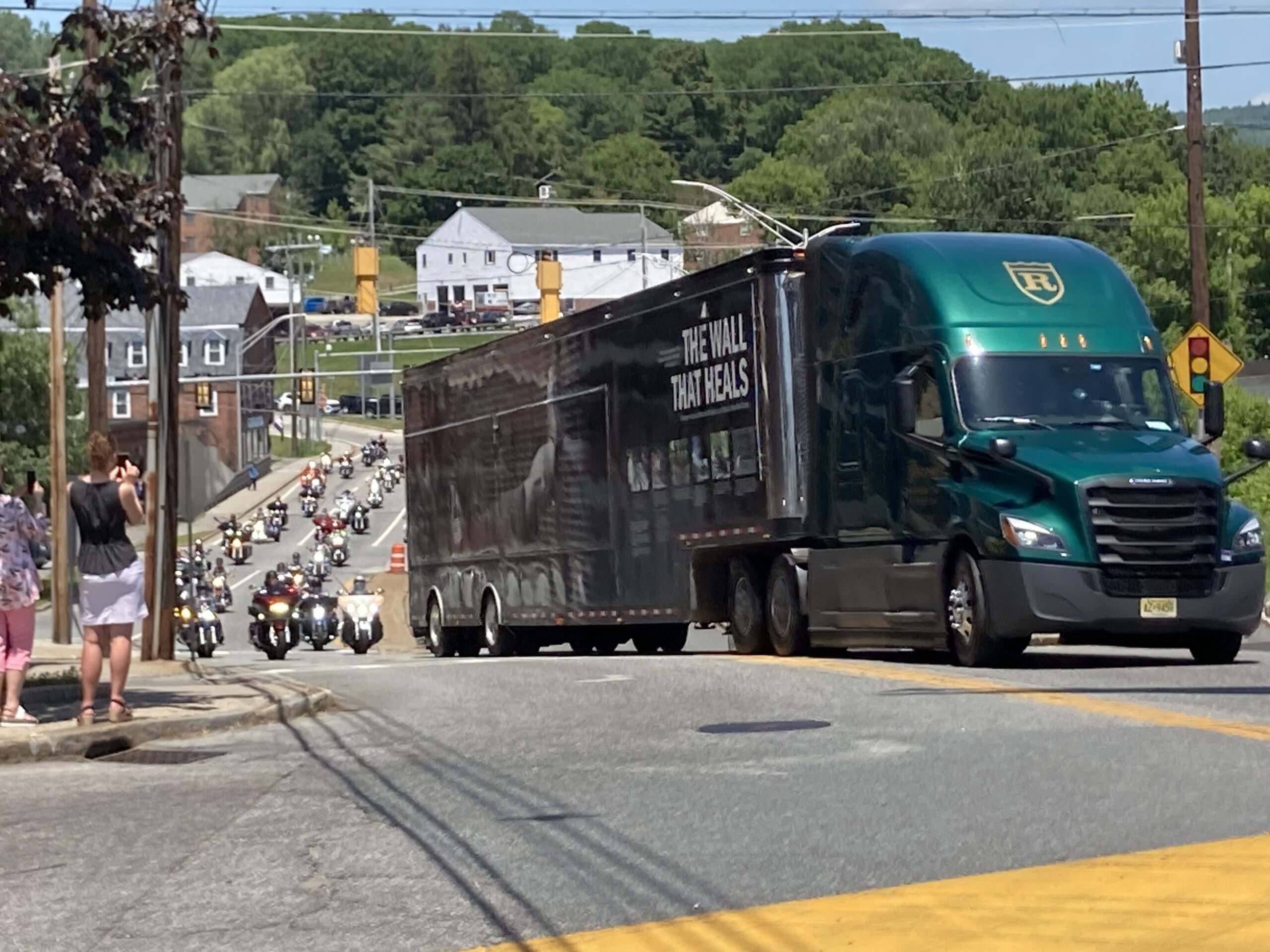
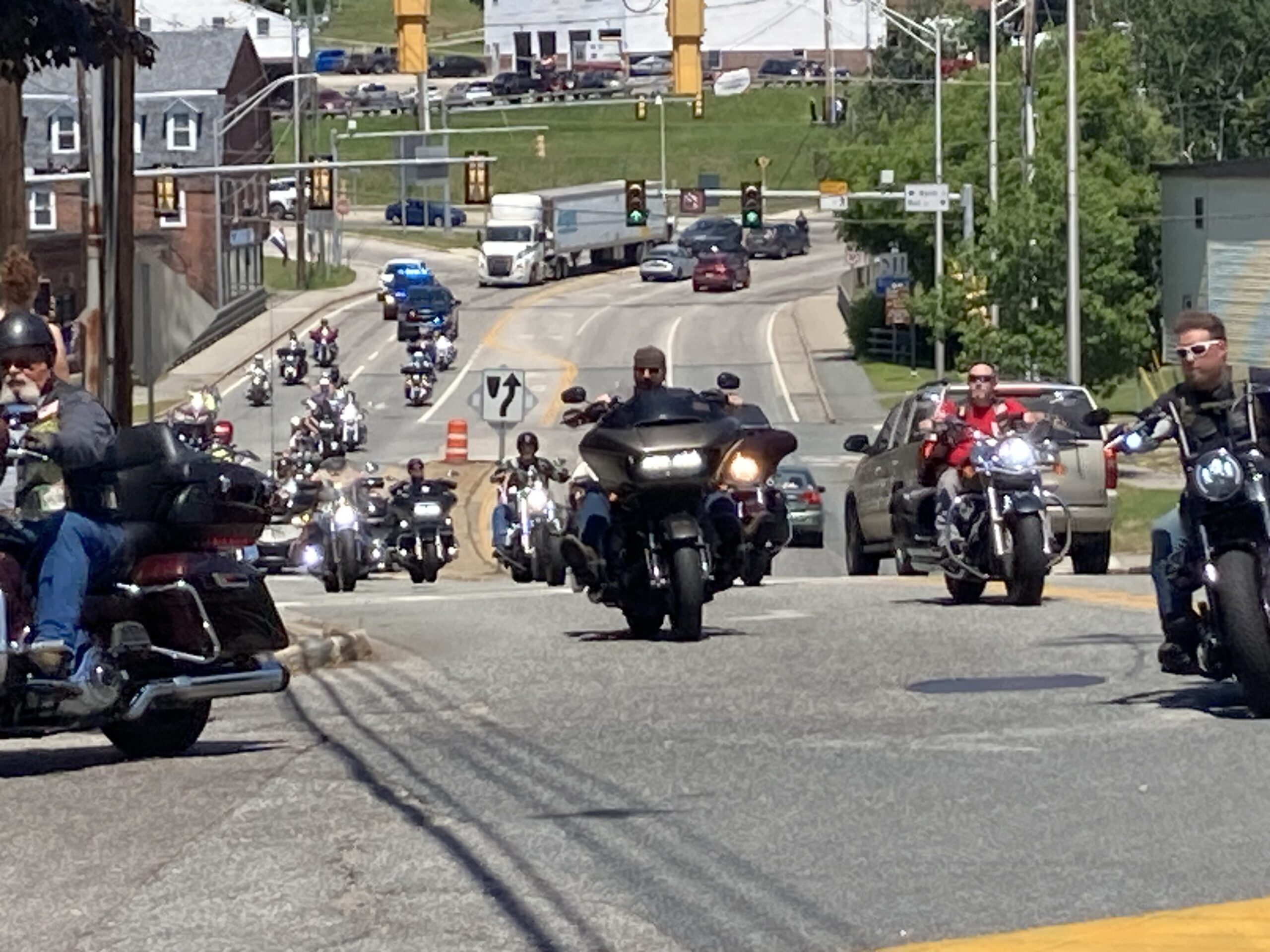
Bill Dufour, president of Rolling Thunder New Hampshire, Chapter 2, assembled a vehicle escort comprising 96 volunteer motorcycle riders and 32 police, fire and civilian vehicles, which led the installation transport across the state, from Andover to Monadnock Park.
In towns along the route, many residents stood outside to greet the escort, including in Claremont’s Broad Street Park.
“When we did the escort, yeah, those greetings) made so many people’s eyes swell up,” Dufour said. “I’m telling you, that was just from the emotions of people lining up the streets. It was just unbelievable.”
As many as 40 people participated in the organizational meetings for this project, and a long list of individuals, businesses and organizations donated money or their services, including to provide food to the volunteers, Limoges said. This included the Claremont Historical Society, which sponsored the committee’s application for non-profit status.
A follow-up project meeting will be held July 22 at 6:15 p.m. at the Claremont Community Center, which will include a discussion of how to appropriate the remaining donation funds. Limoges said that he hopes that some money can be used to fund future projects for veterans.
For more coverage of the Wall that Heals project the following are recordings from Claremont Community Media Center.
Initial Interview with Bill and Gwen – https://reflect-claremont.cablecast.tv/Cabl…/show/16419…,
Wall That Heals – Opening Ceremony – https://reflect-claremont.cablecast.tv/Cabl…/show/16641…,
Motorcycle Escort – https://reflect-claremont.cablecast.tv/Cabl…/show/16640…,
PTSD Ceremony – https://reflect-claremont.cablecast.tv/Cabl…/show/16643…,
Cardinal Perspective – https://reflect-claremont.cablecast.tv/Cabl…/show/16655…
and Closing Ceremony – https://reflect-claremont.cablecast.tv/Cabl…/show/16654…